Great Wall Of China Photo Spots: Where To Get The Best Shots
The photograph in your head, the wall dragging over ridge after ridge into the haze, is real, but you will not get it everywhere. The famous restored sections give you the wall up close; the wilder ones give you the sweep. Knowing which is which, and when the light lands, is most of the job.
In Brief: Choose your landscape and discuss timing before travel. Jinshanling rewards a day planned around walking and photographs.
Explore Jinshanling Private Hiking Day
Great Wall photography rewards two decisions made before you arrive: which section, and what time. Get those right and even a phone produces something you will print. Here is where the strongest images come from.
Jinshanling: The Classic Sweeping Shot
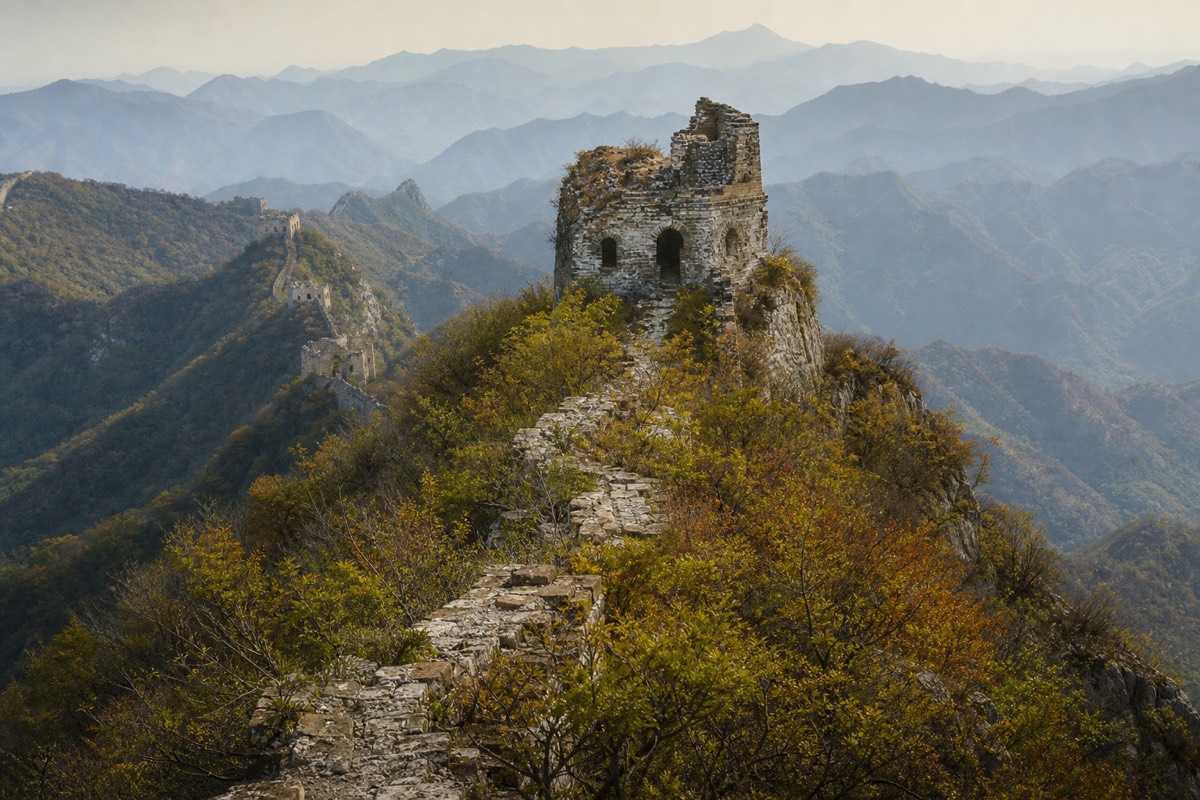
If you want the postcard, the wall receding over a dozen ridgelines with wild watchtowers punctuating the skyline, Jinshanling is the answer. Its mix of restored and unrestored wall gives texture that fully rebuilt sections lack, and the low visitor numbers mean you can compose without a crowd in the frame. Walk out along the towers and shoot back the way you came; the repeating arches of the ramparts are the picture. Early morning and the last hour of light are transformative here.
Mutianyu: Framed By Forest
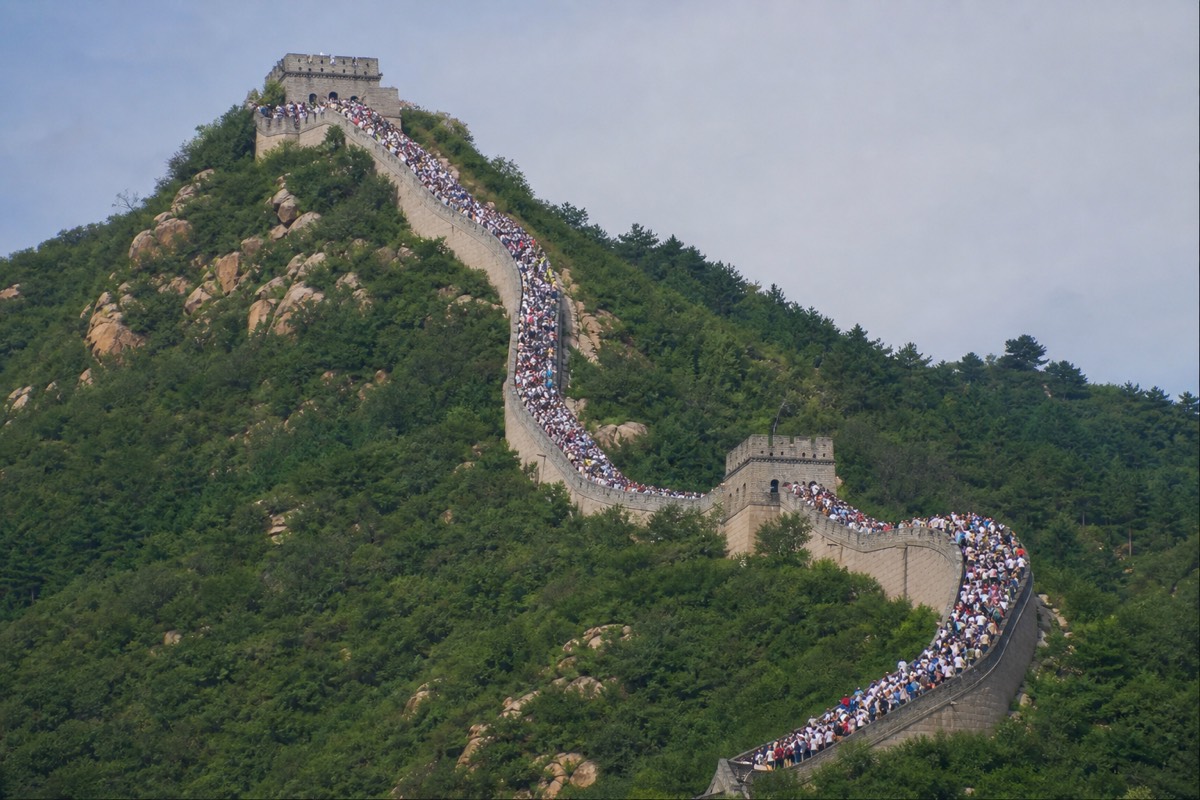
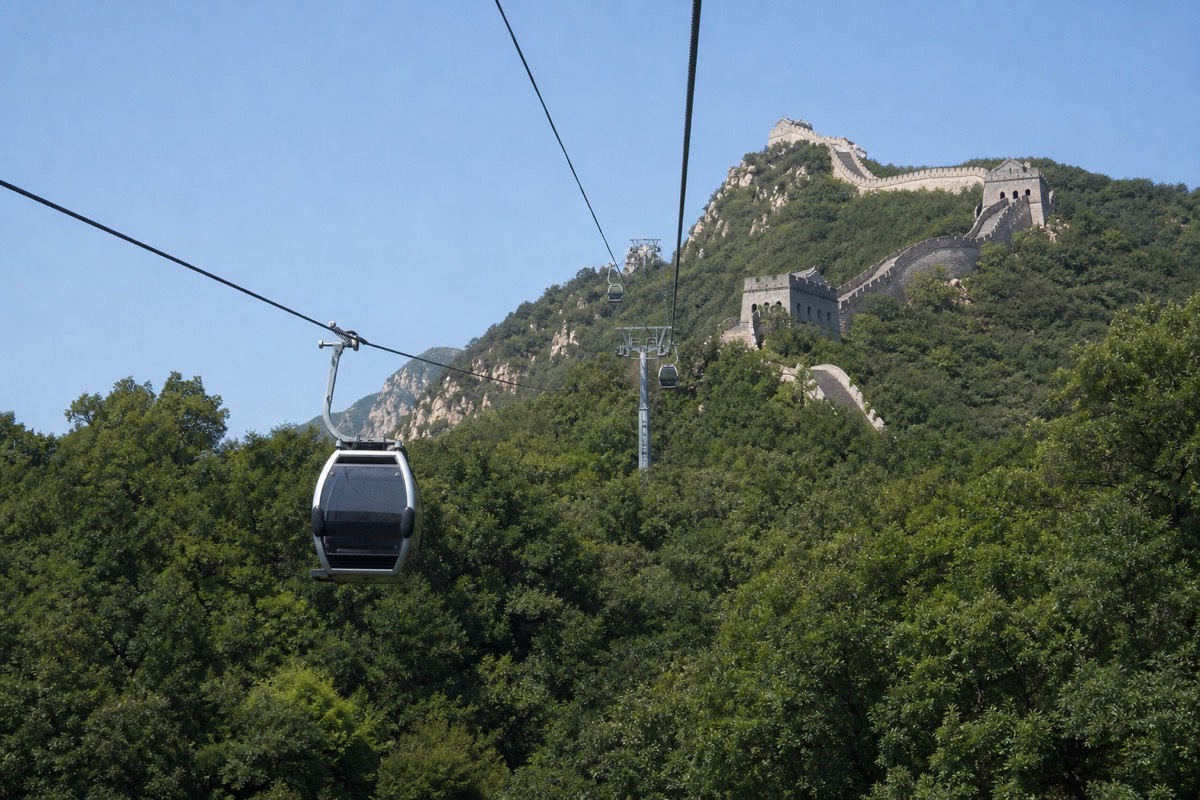
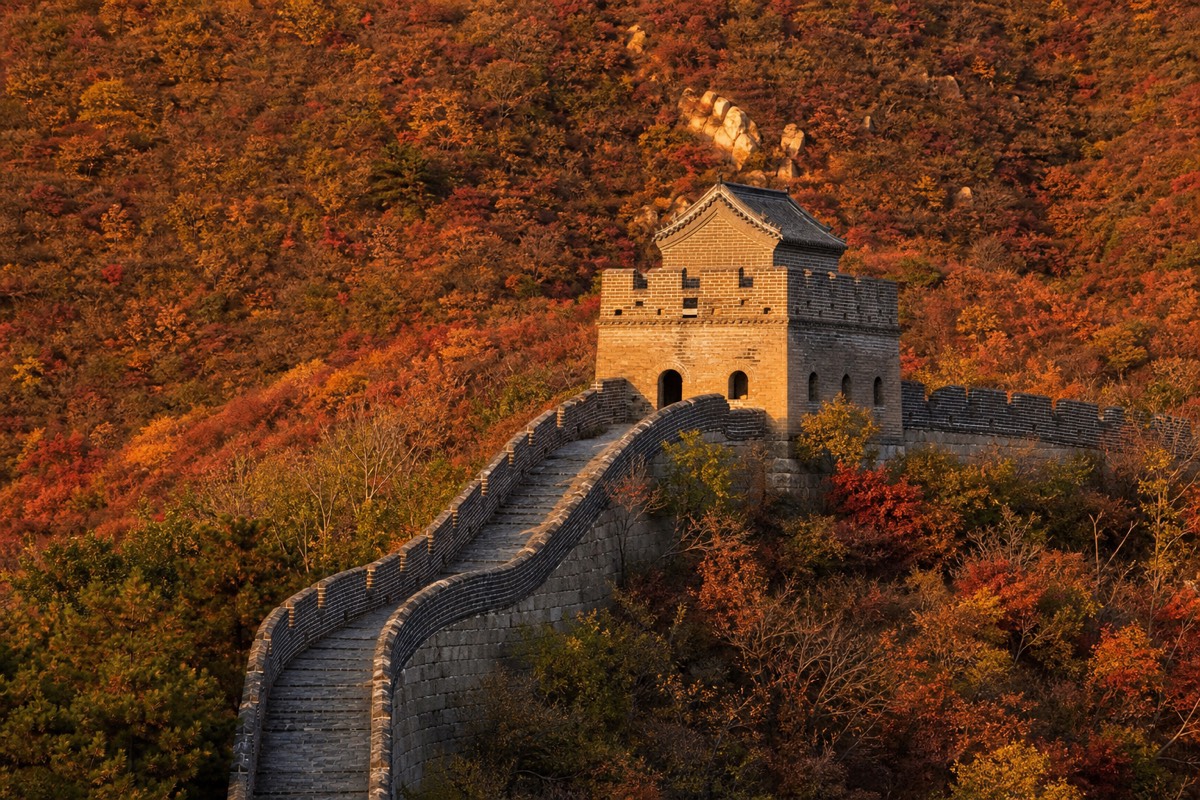
Mutianyu is the most photogenic of the easy sections. The dense forest that backs it turns vivid green in late spring and gold in late October, so the wall reads as a pale ribbon threaded through colour rather than sitting on bare hills. The watchtowers are handsome and close together, and the cable car itself gives an elevated angle on the way up. It is the best section for a strong shot without a hard hike.
Simatai And Gubei: The Night And Blue Hour
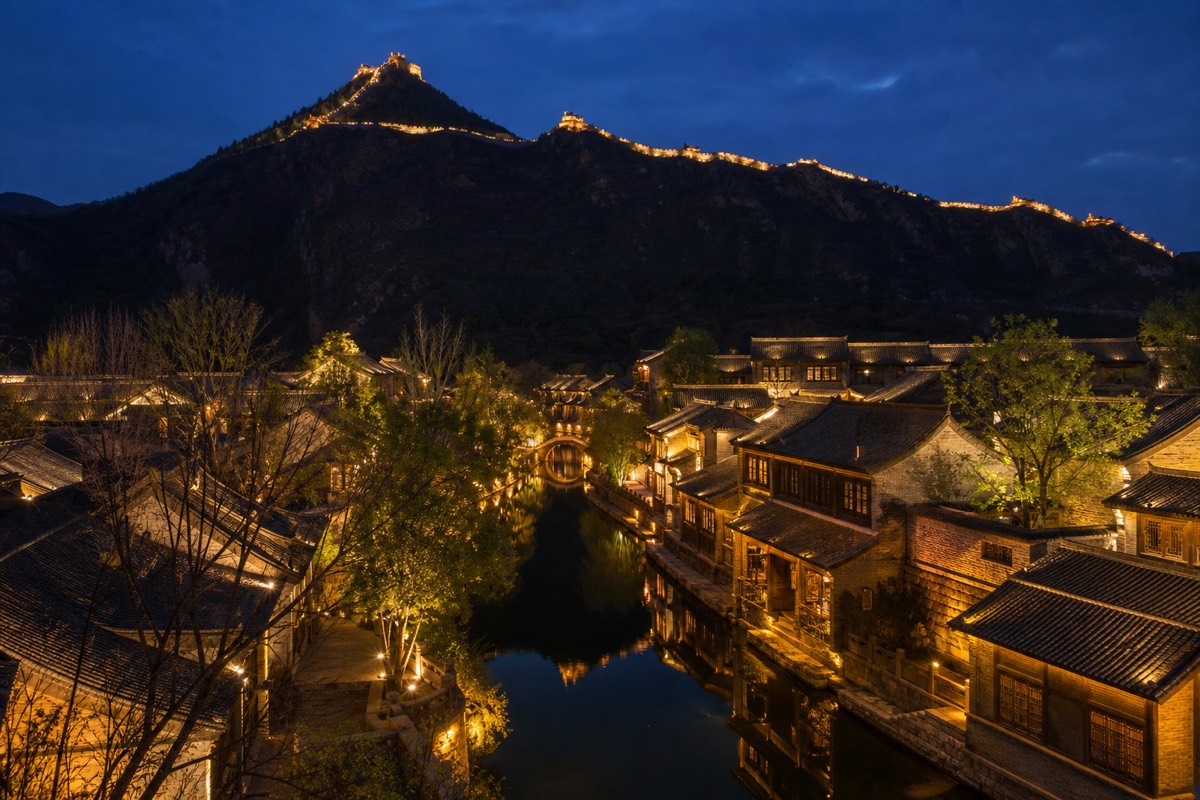
Simatai is the only section lit after dark, and the blue hour over Gubei Water Town, with the illuminated wall climbing behind the canal town's rooftops, is a very different image from the daytime ridgelines. Reflections in the water, lantern light, and the wall above make this the most atmospheric shoot of all. A small tripod or a steady surface helps in the low light.
Jiankou: The Wild Wall (For Those Who Earn It)
The most dramatic Great Wall photographs, the ones of collapsing towers and stone swallowed by scrub, come from Jiankou. It is unrestored, genuinely dangerous, and has no facilities, so it should only be attempted with an experienced guide who knows the safe lines. If you are a serious photographer travelling with the right support, it is unmatched. For everyone else, Jinshanling gives you most of the wildness with far less risk.
Timing And Light
The two best windows are the first hour after opening and the last hour before closing. Midday sun flattens the ramparts and washes out the ridgelines; low side light rakes across the stone and separates each tower from the next. Autumn (late October) and a clear day after rain give the deepest colour and the cleanest air, which matters when your subject stretches to the horizon.
Sunrise Or Sunset At The Great Wall?
Both beat midday, but for most visitors the last hour before closing is easier to reach than dawn, and it lights the ramparts just as beautifully. Low side light rakes across the stone and separates the towers at either end of the day; flat midday sun is the one to avoid.
Sunrise gives you the emptiest wall and the softest light, but it means arriving before the gates or staying overnight nearby. Late afternoon, as the day-trippers leave, is the practical golden hour. Our guide to the best time to visit the Great Wall covers the seasons that give the cleanest air, and Jinshanling at either end of the day is the photographer's pick.
How Do You Get A Photo With No Crowds In It?
Go early to a quiet section and shoot away from the entrance: the first hour at Jinshanling, or the far end of the Mutianyu stretch, gives you empty stone. Crowds cluster near the cable-car stations and the gates, so walking a few towers out usually clears the frame.
The quietest sections are the farther ones, so if an empty wall is the goal, the section matters as much as the hour, a theme in our guide to which Great Wall section to visit. Arriving before the coaches is the single biggest advantage, which is why an early guided start helps; our Great Wall of China Beijing tours reach the wall ahead of the crowds.
Which Section Is Most Photogenic Overall?
Jinshanling for the wild, sweeping ridgeline shot; Mutianyu for the wall framed by forest; Simatai and Gubei for the lit night scene. Each offers a different kind of picture, so the most photogenic depends on the image in your head.
For the classic wall-over-the-hills shot, Jinshanling wins; for autumn colour, Mutianyu; for something no other section can give, the Gubei Water Town and Simatai night wall. All three reward the early or late light described above.
Practical Tips For The Shot
- Shoot along the wall, not just across it, to use the repeating towers as a lead-in line.
- Include a single figure on a distant rampart for scale; it makes the wall read as huge.
- Go early not just for light but for empty stone; by mid-morning the restored sections fill up.
- Clear-air days after rain beat hazy summer afternoons for long views.
- On a guided tour you arrive before the coaches, which is the photographer's real advantage.